| By Graeme Salt |
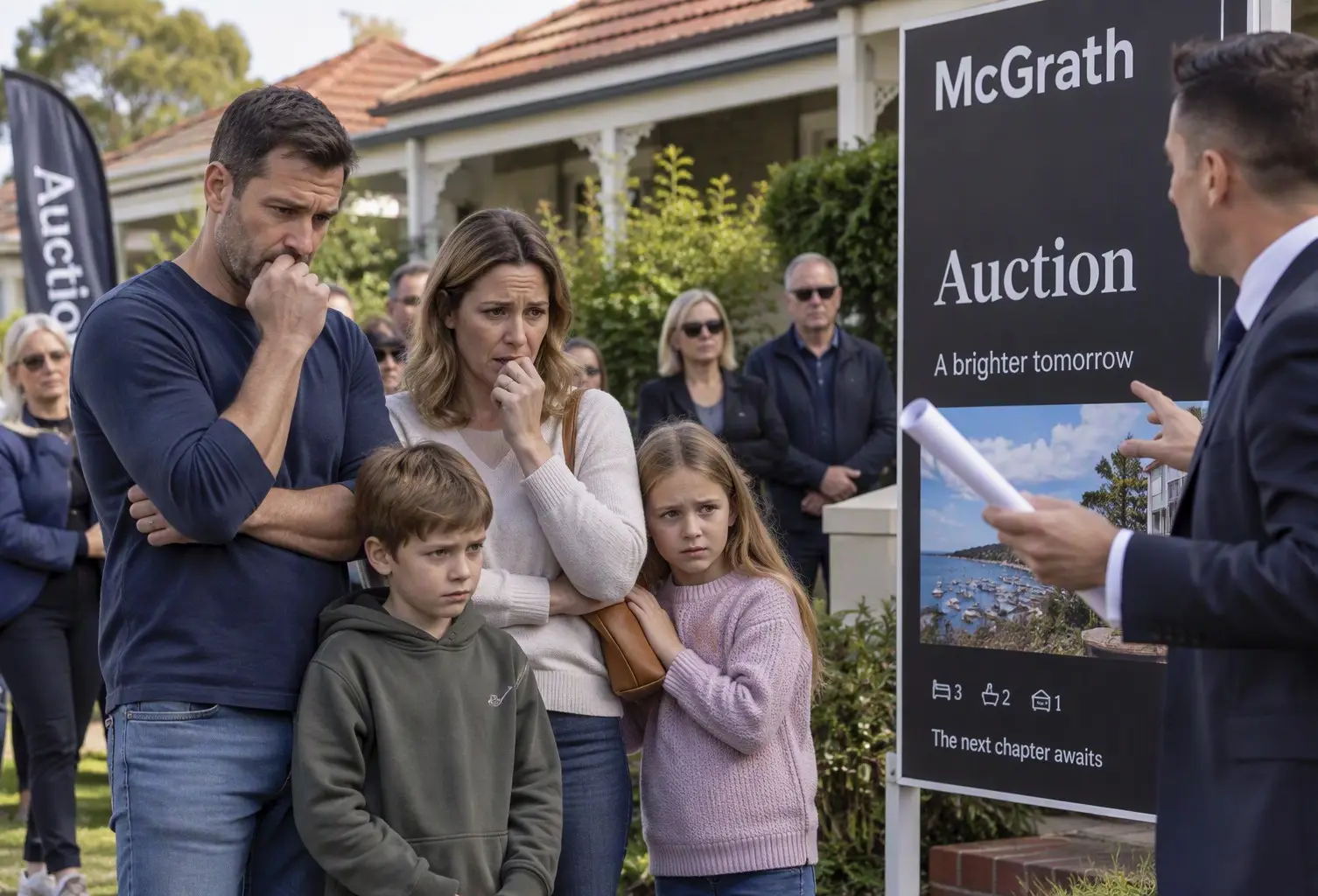
House prices have fallen for five straight months and right now the mood is starkly divided.
Is now a good time to buy? Should you be worried?
Housing can keep you awake at night for any number of reasons, but there is a floor that is likely to determine how low prices will go. That floor is the cost to build a new home, or to replace or renovate an existing one. If we actually want cheaper housing, we need to make it cheaper to build.
That floor is the cost to build a new home, or to replace or renovate an existing one. If we actually want cheaper housing, we need to make it cheaper to build.
Most economists believe Australia has a productivity problem – we still build homes the way cars were built before the assembly line. In order for housing to be cheaper to buy, it needs to be cheaper and more productive to build.
Below you’ll find more on:
- Why it costs a million dollars to build a home
- The true cost of car parks and spare rooms
- If housing is a solved problem, why is it so hard to innovate?
The million dollar house
A new house and land package on the edge of Sydney costs $1.18 million. The land alone is $657,000. The house is $499,000, and transaction costs add another $26,000. Melbourne and Brisbane come in around $850,000, and Perth, Adelaide and Hobart around $650,000.
The biggest concern is the rise. House construction prices have risen 51 per cent since June 2020. That’s almost double consumer inflation over the same period, and it’s getting worse, not better.
House construction prices have risen 51 per cent since June 2020.
A builder won’t sell a home for less than it cost to build. That’s why more supply alone won’t solve affordability for first home buyers. If each new home costs a million dollars to deliver, building more of them doesn’t get you a cheaper one.
So let’s break down the costs, and what’s changed.
The materials
Materials explain about 40 per cent of the rise. Timber and steel made the headlines during COVID and have since settled. The bigger increases are in what goes behind the plaster. I didn’t expect to be writing about electrical conduit, but here we are.
Material Price and changes since June 2020:
- Copper pipes and fittings +122 per cent
- Electrical cable and conduit +77 per cent
- Plastic pipes and fittings +66 per cent
- Clay bricks +50 per cent
- Plaster products +46 per cent
- Structural timber +42 per cent
The trades
Bricklayers, tilers, roofers and carpenters are in short supply, and the construction industry as a whole is short around 300,000 workers – and that’s before we add in the Brisbane Olympics and other major builds.
There are also fewer builders, with growing insolvencies. This is driven by a combination of construction material increases and labour shortages. Builders on fixed-price contracts wore the cost blowouts, and thousands went broke. Construction company insolvencies doubled between 2022 and 2025. Now companies build a risk buffer into their quotes to accommodate cost increases, but this means higher prices and uncertainty for consumers too.
The wait
The biggest impact of labour shortages is time to build. A new house now takes 10.4 months to build, up from 6.4 months a decade ago. For a first home buyer that’s months of rent on top of interest on the land and construction loan.
Taxes and regulatory charges
Almost half of that Sydney price flows to government in one form or another. The Centre for International Economics (CIE) broke that figure down for the Housing Industry Association (HIA) and estimates 49 per cent, or about $576,000, of a $1 million build goes to taxes, charges and regulatory costs, including GST on materials and labour.
This number needs some unpacking before you quote it to your friends. Taxes as development contributions are necessary to cover the costs of everything that is not the house – roads, electricity supply, water pipes, sewerage, parks, new schools etc. It’s the increase that’s concerning – $576,000 is up $160,000 in five years. Brisbane’s bill has more than doubled over the same period.
The apartment advantage
In established suburbs the roads, schools and sewers already exist. Taxes as development contributions and duties come to about 4 per cent of the cost of a new Sydney apartment, according to the NSW Productivity and Equality Commission. That’s a structural cost advantage for apartments and townhouses in areas that are already built vs creating new suburbs.
The car park
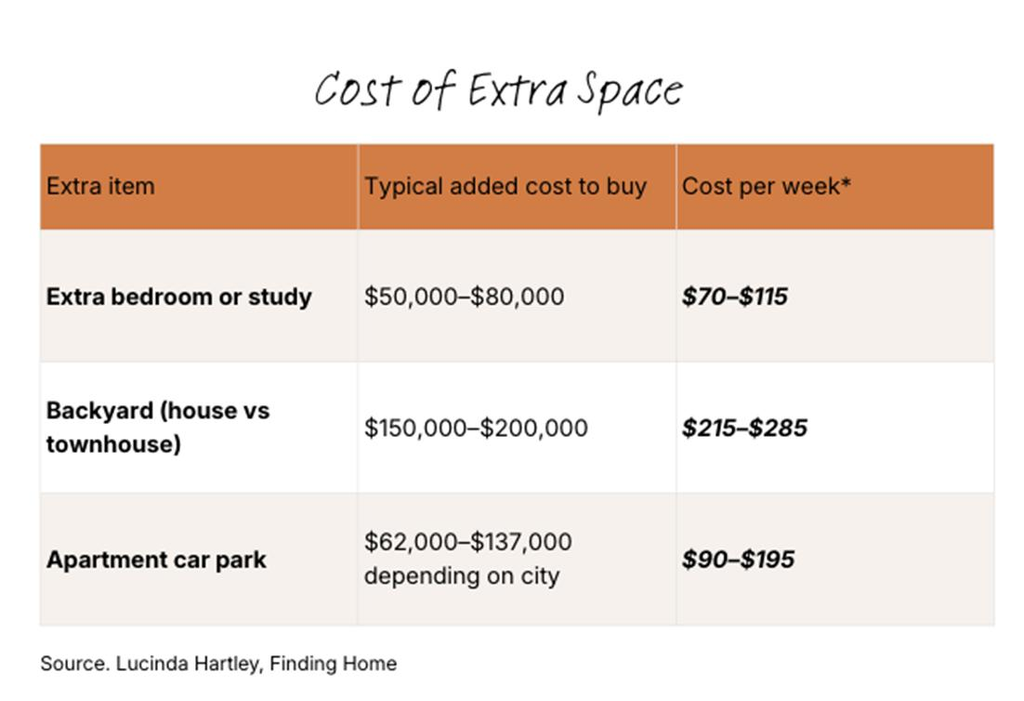
Planning rules require most new apartments to include parking, whether the buyer wants it or not. Grattan Institute found minimum parking requirements add $70,000 to a typical two-bedroom apartment in Sydney, $62,000 in Melbourne, $113,000 in Brisbane and $137,000 in Perth.
Car parking can add $100,000 to the cost of a new apartment
Around 40 per cent of households in studios and one-bedroom apartments don’t own a car, and up to 40 per cent of apartment car spaces sit empty each night. Buyers should be able to purchase the apartment and the car park separately.
Victoria scrapped minimums near good public transport late last year. Nightingale Housing, builds with no car parks. I happily use Go Get on the occasion when I need a car.
The spare room
Smaller homes cost less to build, I happily live in a 47 square metres granny flat. Bigger homes push buyers further out, and then you pay to own what a neighbourhood would otherwise provide: a home gym, a coffee machine, a second car.
What it means if you’re buying
House prices can fall in a downturn. But new homes can’t sell below what they cost to build, and those costs are still rising. A crash won’t make new housing cheap.
Graeme Salt is an award-winning mortgage broker. For a no-obligations consultation on your home loan needs, please contact him on 02 9922 5055